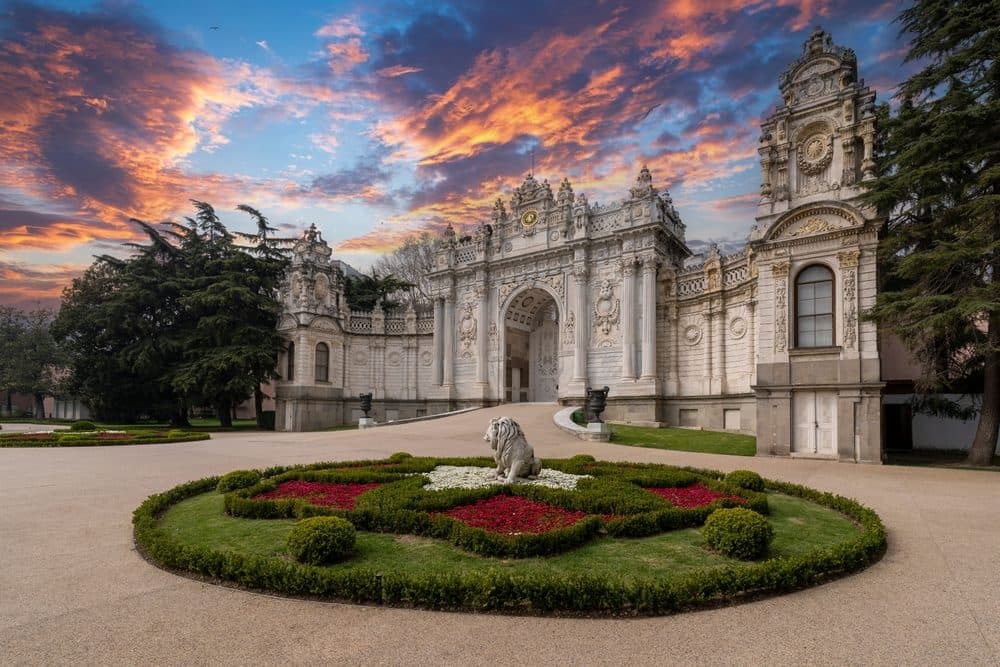
Dolmabahçe Palace
Complete Visitor Guide to Dolmabahçe Palace — Istanbul's Grand Imperial Residence on the Bosphorus
285
Rooms
1856
Established
2.5M
Annual Visitors
Ticket Price
€55
Opening Hours
09:00–17:30
Location
Beşiktaş, Istanbul
Visit Duration
2–3 hours
Closed
Monday
Istanbul's Grand Imperial Residence on the Bosphorus
Dolmabahçe Palace stands as the largest and most lavish palace in Turkey — a staggering 45,000-square-meter monument to Ottoman imperial ambition where East meets West in every gilded detail. Built between 1843 and 1856 on the European shore of the Bosphorus, this was the administrative heart of the Ottoman Empire during its final decades and the place where Mustafa Kemal Atatürk, the founder of modern Turkey, drew his last breath on November 10, 1938.
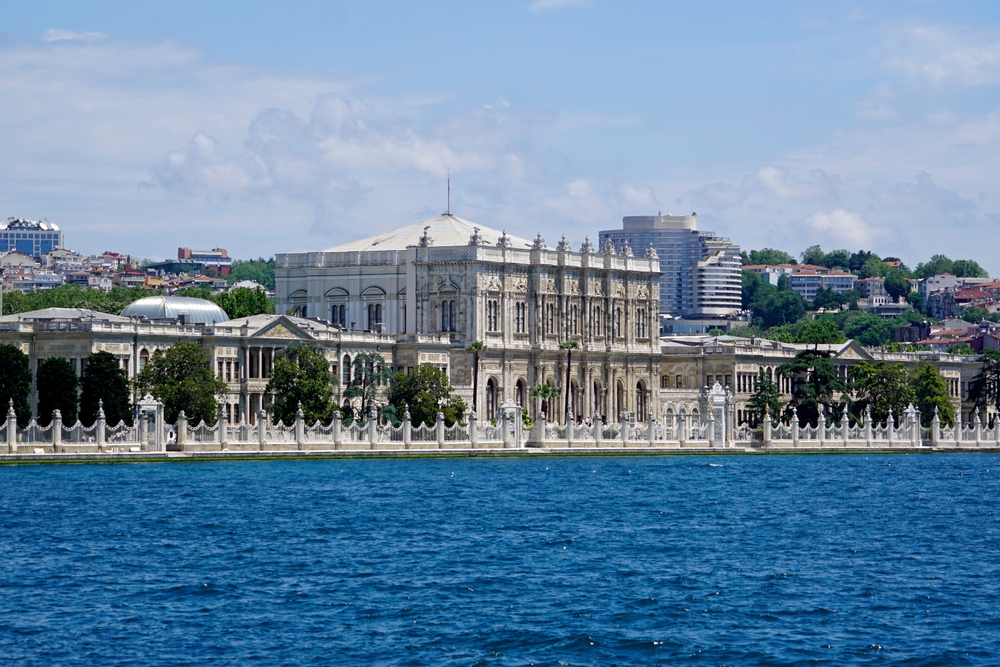
Unlike Topkapı Palace — the earlier seat of power built around intimate courtyards in the classic Ottoman style — Dolmabahçe was conceived as a European-style palace from the ground up. Sultan Abdülmecid I wanted a residence that would rival Versailles, Buckingham Palace, and the Winter Palace in St. Petersburg. He succeeded. The result is a breathtaking fusion of Baroque, Rococo, and Neoclassical architecture woven together with traditional Ottoman decorative arts.
Why Dolmabahçe Palace Deserves Your Time
The Numbers Tell a Story
| Detail | Information |
|---|---|
| Built | 1843–1856 (13 years) |
| Architect | Garabet Balyan & Nigoğayos Balyan |
| Commissioned by | Sultan Abdülmecid I |
| Total Area | 45,000 m² |
| Rooms | 285 |
| Halls | 46 |
| Baths (Hamams) | 6 |
| Gold Used | 14 tonnes of gold leaf |
| Chandeliers | 36 (including the world's largest Bohemian crystal chandelier) |
| Style | Baroque / Rococo / Neoclassical / Ottoman |
| Ticket Price | ₺2,000 foreign / ₺250 Turkish |
| Opening Hours | Tue–Sun, 09:00–17:30 |
| Closed | Every Monday |
| Annual Visitors | ~2.5 million |
What Makes It Extraordinary
The Ceremonial Hall (Muayede Salonu): The crown jewel of the palace is a vast 2,000-square-meter hall topped by a 36-meter dome. Hanging from the center is a 4.5-ton Bohemian crystal chandelier — the largest of its kind in the world — reportedly a gift from Queen Victoria (though historical records suggest it was actually purchased from England). This single room has witnessed coronation ceremonies, state receptions, and pivotal moments in Ottoman and Turkish republican history.
The Crystal Staircase: The main staircase features Baccarat crystal balusters and a double-horseshoe design that is often described as the most elegant staircase in any palace worldwide.
The Harem: With eight separate apartments for the Valide Sultan (Queen Mother), the Sultan's consorts, princes, and princesses, the Harem section offers a rare and intimate view of Ottoman domestic life — far removed from the grand state rooms. Atatürk's private bedroom and the room where he died are located in this section.
14 Tons of Gold: The interior decoration consumed an astounding 14 tonnes of gold leaf, applied to ceilings, walls, and furnishings throughout the palace.
The Bosphorus Setting: The palace stretches 600 meters along the waterfront, offering unparalleled views of the Bosphorus strait. The gardens, which include both the Treasury Garden and the Harem Garden, connect the palace to the water's edge.
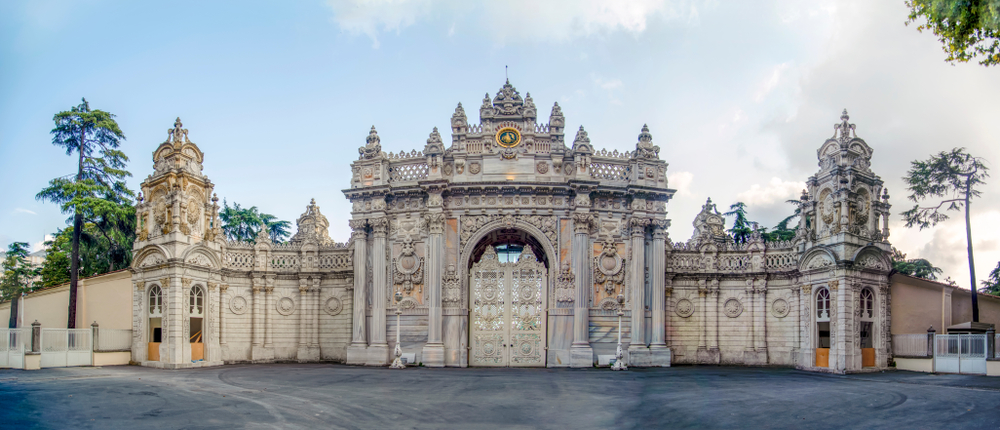
What You'll See Inside
Selamlık (Ceremonial Section)
The Selamlık was the public and administrative wing where the Sultan received foreign ambassadors, held council meetings, and conducted state affairs. Key rooms include:
- Medhal Hall — The grand entrance hall with elaborate ceiling frescoes
- Crystal Staircase — Baccarat crystal balusters, double-horseshoe design
- Red Room — Used for receiving ambassadors
- Süfera (Ambassadors') Hall — Where foreign dignitaries waited
- Ceremonial Hall — The monumental 2,000 m² state room
Harem (Private Quarters)
The Harem was the private living area for the imperial family. Unlike the Topkapı Harem, which evolved over centuries, the Dolmabahçe Harem was planned as a coherent unit:
- Valide Sultan Apartments — The most luxurious private quarters
- Sultan's Private Chambers — Including Atatürk's room (Room 71)
- Blue Hall — Intimate gathering space for the imperial family
- Princes' and Princesses' Quarters — Separate wings for royal children
Palace Grounds
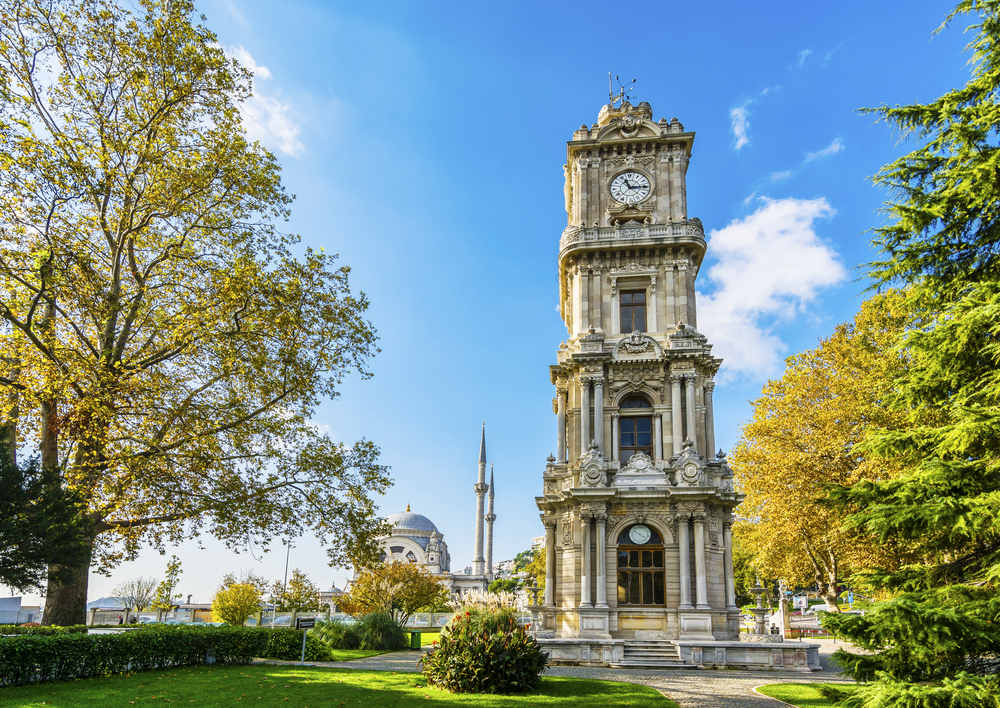
- Clock Tower — The 27-meter Dolmabahçe Clock Tower, built in 1890–1895
- Dolmabahçe Mosque — A Baroque-style mosque within the palace complex
- Treasury Garden & Harem Garden — Formal gardens stretching to the waterfront
- Bird House (Kuşluk) — An ornate aviary
Atatürk and Dolmabahçe Palace
The palace holds a deeply emotional place in the hearts of Turkish citizens. Mustafa Kemal Atatürk used Dolmabahçe as his Istanbul residence and workplace from 1927 until his death on November 10, 1938, at 09:05 in the morning. Every clock in the palace was stopped at 09:05 to mark the moment.
Each year on November 10, hundreds of thousands of people visit the palace to pay their respects. The bed where Atatürk died is draped with the Turkish flag, and the room remains exactly as it was on that morning in 1938.
Plan Your Visit
Dolmabahçe Palace is located in the Beşiktaş district of Istanbul, easily accessible by:
- T1 Tram — Kabataş stop (5-minute walk)
- Ferry — Beşiktaş pier (10-minute walk)
- Bus — Multiple routes serve Beşiktaş
- Walking — 30 minutes from Taksim Square via İnönü Caddesi
Pro Tips:
- Arrive before 10:00 to avoid the biggest crowds
- Buy tickets online in advance to skip the queue
- Allow 2–3 hours for a complete visit
- The palace is closed on Mondays — plan accordingly
- Bag storage is available at the entrance
- Guided audio tours are available in 10+ languages
Explore More
Dolmabahçe Palace is more than a museum — it is a window into the final, turbulent chapter of the Ottoman Empire and the birth of the Turkish Republic. Whether you are drawn by the architectural magnificence, the historical significance, or the emotional weight of Atatürk's last days, this palace delivers an experience unlike any other in Istanbul.
Browse our detailed guides below to plan the perfect visit:
- History — The full story from 1843 to the present
- Plan Your Visit — Tickets, hours, tips, and practical details
- Architecture — Baroque, Rococo, and Ottoman fusion explained
- Ceremonial Hall — The 4.5-ton chandelier and 2,000 m² hall
- The Harem — Private quarters of the imperial family
- Atatürk at Dolmabahçe — His final years, Room 71, and the stopped clocks
- How to Get There — Tram, ferry, bus, and walking directions
- Photo Gallery — Stunning images of the palace
Frequently Asked Questions
After the Palace, discover Istanbul
Minutes from Dolmabahçe — Bosphorus cruises, Topkapı, Hagia Sophia and more. Live availability and verified ratings.